
Accounts Receivable Recovery plays a critical role in maintaining the financial health of healthcare organizations. Delayed reimbursements, unpaid insurance claims, and aging balances can reduce revenue and increase administrative costs. A structured recovery strategy helps providers recover outstanding payments while improving cash flow and overall revenue cycle performance.
Whether you manage a private practice, specialty clinic, or hospital, a systematic recovery process accelerates collections and maximizes reimbursements. When combined with efficient Medical Billing workflows, it creates a stronger financial foundation and supports long-term operational success.
This guide explains how Accounts Receivable Recovery improves reimbursement efficiency and supports sustainable financial growth for healthcare providers.
What Is Accounts Receivable Recovery?
Accounts Receivable Recovery is the process of identifying, tracking, and collecting unpaid or underpaid claims from insurance companies and patients. Billing teams review outstanding accounts, correct claim errors, submit appeals when required, and follow up with payers until appropriate reimbursement is received.
Rather than allowing balances to become write-offs, a proactive recovery strategy helps healthcare organizations recover earned revenue, improve cash flow, and reduce aging accounts.
Organizations that follow effective Accounts Receivable Practices and Process often achieve faster collections through standardized claim management and proactive follow-up.
How Does Accounts Receivable Recovery Work?
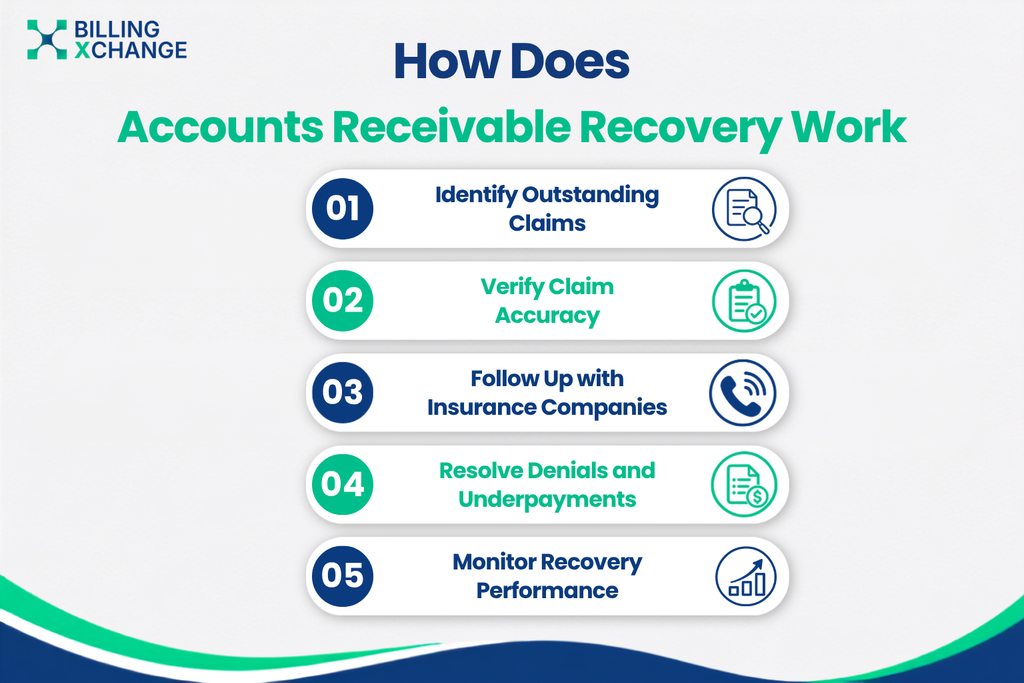
A successful Accounts Receivable Recovery process follows a structured workflow that identifies payment issues and resolves them before claims become excessively aged.
1. Identify Outstanding Claims
- Billing teams review aging reports to identify unpaid or underpaid claims based on aging days, payer type, claim value, and filing deadlines.
- Prioritizing high-value accounts helps healthcare organizations focus recovery efforts where they generate the greatest financial impact.
2. Verify Claim Accuracy
- Claims are reviewed for coding accuracy, documentation, insurance eligibility, authorizations, and payer requirements before follow-up begins.
- Organizations that integrate Dental Billing and medical billing workflows often reduce preventable claim errors through standardized quality checks.
3. Follow Up with Insurance Companies
- Billing specialists contact insurance carriers to verify claim status, submit missing documentation, correct errors, and file appeals when necessary.
- Healthcare providers using proven Strategies of Accounts Receivable Recovery in Healthcare maintain consistent payer follow-up, helping reduce claim aging and improve reimbursement rates.
4. Resolve Denials and Underpayments
- Recovery teams investigate denied, partially paid, or incorrectly processed claims to identify billing issues and reimbursement discrepancies.
- Timely corrections, appeals, and follow-up improve collection rates while reducing unnecessary write-offs.
5. Monitor Recovery Performance
- Organizations track key performance indicators such as Days in AR, collection rate, denial rate, and aging reports to measure recovery success.
- Many healthcare providers partner with BillingXchange to streamline follow-up processes, improve reporting, and maximize reimbursement efficiency.
What Are the Common Challenges in Accounts Receivable Recovery?
Healthcare providers face several challenges that can slow collections and impact cash flow, even with experienced billing teams.
Complex Payer Requirements
- Different Payer Guidelines: Insurance companies follow unique billing rules, documentation standards, and appeal processes that complicate claim recovery.
- Requires Standardized Workflows: Providers using Strategies of Accounts Receivable Recovery in Healthcare improve reimbursement consistency by following structured recovery procedures.
Aging Accounts
- Older Claims Become Harder to Recover: As claims age, they require more research, documentation, and repeated payer communication.
- Delays Reduce Collection Rates: Prioritizing high-value aging accounts improves recovery opportunities and reduces potential write-offs.
Limited Billing Resources
- Heavy Administrative Workloads: Internal billing teams often balance claim submissions, payment posting, denials, and patient inquiries simultaneously.
- Dedicated Recovery Support Improves Efficiency: Additional recovery resources help increase collections without adding administrative pressure.
Regulatory Changes
- Evolving Healthcare Requirements: Frequent updates to billing regulations and payer policies can increase denials if organizations fail to adapt.
- Continuous Staff Training: Regular education and process improvements support stronger Accounts Receivable Recovery performance and compliance.
Limited Reporting
- Insufficient Performance Visibility: Without detailed analytics, providers may struggle to identify payer trends, aging accounts, and collection gaps.
- Data-Driven Decision Making: Understanding common Accounts Receivable Challenges helps organizations strengthen reporting, optimize recovery strategies, and improve financial performance.
What Are the Benefits of Accounts Receivable Recovery?
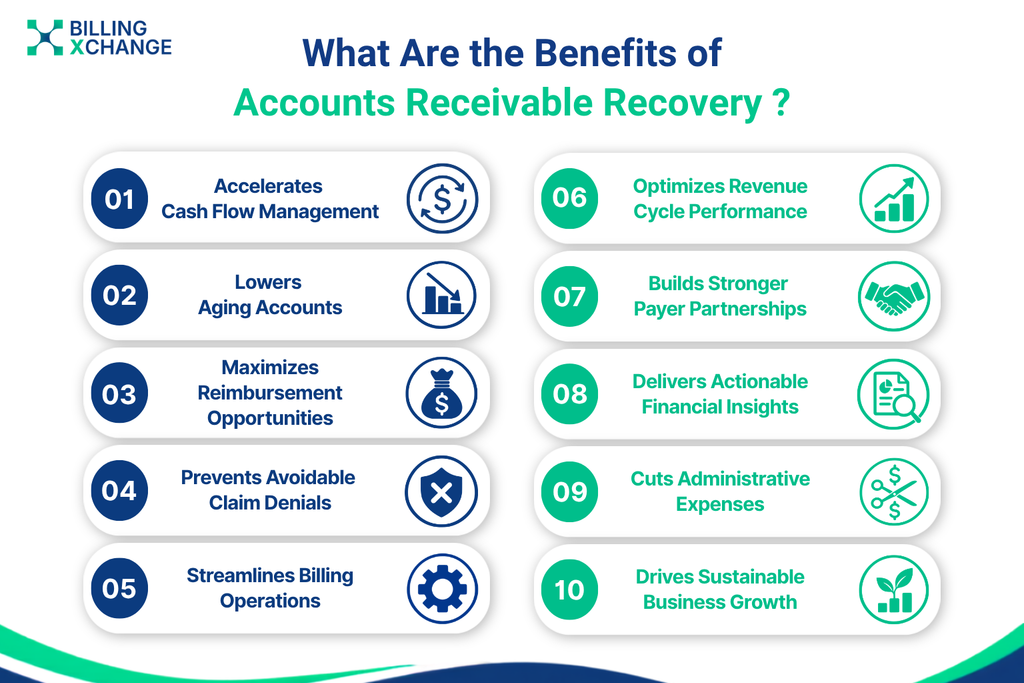
An effective Accounts Receivable Recovery strategy helps healthcare organizations recover unpaid revenue, improve cash flow, and strengthen revenue cycle performance. By resolving outstanding claims faster, providers can reduce payment delays and increase reimbursement efficiency. Below are the key benefits of implementing a structured recovery process.
- Accelerates Cash Flow Management
- Speeds Up Revenue Collection: Timely recovery of unpaid and underpaid claims ensures a consistent flow of reimbursements.
- Supports Financial Stability: Faster payments help healthcare organizations manage operating expenses and invest in long-term growth.
2. Lowers Aging Accounts
- Reduces Outstanding Balances: Regular monitoring and follow-up prevent claims from remaining unpaid for long periods.
- Minimizes Write-Off Risks: Lower aging accounts improve collection rates and strengthen the revenue cycle.
3. Maximizes Reimbursement Opportunities
- Recovers Missed Revenue: Identifies underpayments, denied claims, and overlooked reimbursement opportunities.
- Improves Payment Accuracy: Correcting claim issues helps providers receive the full reimbursement they have earned.
4. Prevents Avoidable Claim Denials
- Enhances Claim Accuracy: Reviewing documentation, coding, and eligibility reduces preventable billing errors.
- Improves First-Pass Acceptance: Fewer denials lead to quicker reimbursements and less administrative rework.
5. Streamlines Billing Operations
- Optimizes Recovery Workflows: Billing teams can prioritize high-value claims and automate routine follow-ups.
- Boosts Staff Productivity: Efficient processes reduce manual tasks and improve operational performance.
6. Optimizes Revenue Cycle Performance
- Strengthens End-to-End Processes: Effective recovery improves every stage from claim submission to final payment.
- Increases Financial Performance: Better coordination between billing and collections results in higher reimbursement rates.
7. Builds Stronger Payer Partnerships
- Improves Insurance Communication: Consistent follow-up helps resolve payment issues more efficiently.
- Accelerates Claim Resolution: Strong payer relationships contribute to faster reimbursements and fewer delays.
8. Delivers Actionable Financial Insights
- Monitors Key Performance Metrics: Tracking KPIs such as Days in AR and collection rates reveals performance trends.
- Supports Better Decisions: Financial insights help healthcare leaders optimize recovery strategies and resource planning.
9. Cuts Administrative Expenses
- Reduces Manual Work: Efficient recovery minimizes repetitive follow-ups, corrections, and payment investigations.
- Improves Resource Utilization: Billing teams can focus on higher-value revenue cycle activities instead of routine administrative tasks.
10. Drives Sustainable Business Growth
- Protects Earned Revenue: Strong recovery processes maximize collections and improve financial health.
- Supports Long-Term Expansion: Healthy cash flow enables healthcare organizations to invest in technology, staff, and patient care.
How Can Healthcare Providers Improve Accounts Receivable Recovery?
Improving Accounts Receivable Recovery requires a proactive strategy that combines technology, skilled billing professionals, and consistent follow-up. Healthcare organizations that optimize their recovery process can reduce aging accounts, improve cash flow, and increase reimbursement rates.
1. Monitor Accounts Receivable Regularly
- Review aging reports regularly to identify unpaid claims before they become difficult to recover.
- Prioritize older and high-value accounts to maximize recovery opportunities and improve cash flow.
2. Strengthen Claim Accuracy
- Ensure accurate coding, complete documentation, and insurance verification before claim submission.
- Organizations using streamlined Medical Billing processes improve claim acceptance and shorten reimbursement cycles.
3. Follow Up with Payers Consistently
- Contact insurance companies promptly to resolve pending claims, submit appeals, and correct billing issues.
- Providers that address common Accounts Receivable Challenges develop stronger follow-up strategies and reduce claim aging.
4. Use Data and Performance Metrics
- Monitor key performance indicators such as Days in AR, denial rate, net collection rate, and recovery percentage.
- Regular reporting helps identify bottlenecks and optimize recovery workflows for better reimbursement results.
5. Partner with Experienced Revenue Cycle Experts
- Outsourcing Accounts Receivable Recovery provides access to experienced billing professionals and dedicated recovery teams.
- Advanced reporting, proactive follow-up, and scalable recovery solutions reduce administrative workload while increasing collections.
AR Recovery Comparison for Challenge and Benefit
| Common Challenge | Business Impact | AR Recovery Benefit |
| Complex Payer Requirements | Delays payments and increases claim denials. | Improves claim accuracy and reimbursement rates. |
| Aging Accounts | Older claims become harder to collect. | Reduces aging balances and write-offs. |
| Limited Billing Resources | Staff have less time for recovery tasks. | Increases collection efficiency and productivity. |
| Regulatory Changes | Billing errors increase due to changing rules. | Strengthens compliance and reduces denials. |
| Limited Reporting | Revenue issues are difficult to identify. | Provides better financial insights. |
| Delayed Payer Follow-Up | Claims remain unpaid for longer periods. | Speeds up reimbursements and collections. |
| Manual Billing Processes | Administrative workload increases. | Improves operational efficiency. |
| Revenue Leakage | Missed claims reduce overall revenue. | Maximizes earned reimbursements. |
Why Choose BillingXchange for Accounts Receivable Recovery?
Healthcare organizations need more than a billing vendor they need a reliable revenue cycle partner. BillingXchange delivers customized Accounts Receivable Recovery solutions designed to help providers recover outstanding revenue while improving operational efficiency.
Our experienced team works closely with healthcare practices to identify unpaid claims, resolve denials, recover underpayments, and reduce aging accounts. By combining industry expertise with proven workflows, we help providers strengthen cash flow and maximize reimbursements.
BillingXchange also supports providers with integrated Dental Billing services, creating a more efficient revenue cycle while helping healthcare organizations protect revenue, improve collections, and focus on delivering quality patient care.
Conclusion
An effective Accounts Receivable Recovery strategy is essential for maintaining financial stability in today’s healthcare environment. By identifying outstanding claims early, improving claim accuracy, monitoring performance, and following up consistently, healthcare organizations can reduce aging accounts and increase reimbursements.
Whether you manage a private practice, specialty clinic, or hospital, a structured recovery process improves revenue cycle performance and long-term financial stability.
Ready to improve your healthcare revenue cycle? BillingXchange delivers expert Accounts Receivable Recovery solutions that reduce aging accounts, accelerate reimbursements, and maximize collections. Contact our team today to optimize your revenue cycle and drive long-term financial growth.
Frequently Asked Questions (FAQs)
Accounts Receivable Recovery helps recover unpaid claims, improve cash flow, reduce aging balances, and increase reimbursement efficiency.
Common causes include claim denials, coding errors, incomplete documentation, insurance eligibility issues, delayed claim submissions, and payment discrepancies.
Healthcare providers can improve Accounts Receivable Recovery by submitting accurate claims, monitoring aging reports, following up with payers consistently, and resolving denials promptly.
Regular AR monitoring helps identify unpaid claims early, improve collection rates, reduce write-offs, and support better financial decision-making.
Yes. Outsourcing recovery services provides experienced billing specialists, faster claim follow-up, advanced reporting, and improved collections while reducing administrative workload.