Category: Payment Posting

  • How Dental Payment Processing Works: A Step-by-Step Overview

    How Dental Payment Processing Works: A Step-by-Step Overview

    Dental Payment Processing helps dental practices manage patient payments, outstanding balances, deductibles, copayments, and recurring transactions efficiently. A well-organized workflow supports accurate collections, reduces administrative tasks, and maintains consistent cash flow.

    Each transaction involves the patient, dental practice, payment method, processor, and financial records. When these elements work together, dental teams can reduce errors, simplify account management, and provide a more convenient payment experience.

    This guide covers the key steps, payment methods, and best practices for managing dental payments, along with how BillingXchange can improve payment workflows and administrative efficiency.

    What Is Dental Payment Processing?

    Dental Payment Processing is the process of accepting, authorizing, recording, and reconciling payments made to a dental practice. Patients may pay through credit or debit cards, online portals, electronic transfers, or mobile wallets.

    The process involves the patient, dental practice, payment processor, payment gateway, and financial institution. Each party plays a role in securely completing and settling the transaction.

    An efficient payment workflow helps practices maintain accurate financial records, track outstanding balances, and improve visibility into collections. It can also work alongside Dental Billing to support organized account management.

    What Are the Steps Involved in Dental Payment Processing?

    A successful Dental Payment Processing workflow does more than accept a card. It also requires consistent financial controls and accurate documentation.

    StepWhat HappensMain Benefit
    Patient balance reviewDetermine the amount dueAccurate collection
    Payment selectionPatient chooses a methodBetter convenience
    Transaction authorizationPayment information is verifiedSecure processing
    ApprovalTransaction is accepted or declinedImmediate confirmation
    Payment recordingPayment is entered into the accountAccurate records
    SettlementFunds move to the practice accountTimely revenue
    ReconciliationTransactions are matched with depositsFewer discrepancies

    Clear, standardized procedures help front-office teams manage payments consistently. Integrating payment technology with Medical Billing systems can also improve financial workflows, provided the system supports dental-specific requirements.

    How Does Dental Payment Processing Work?
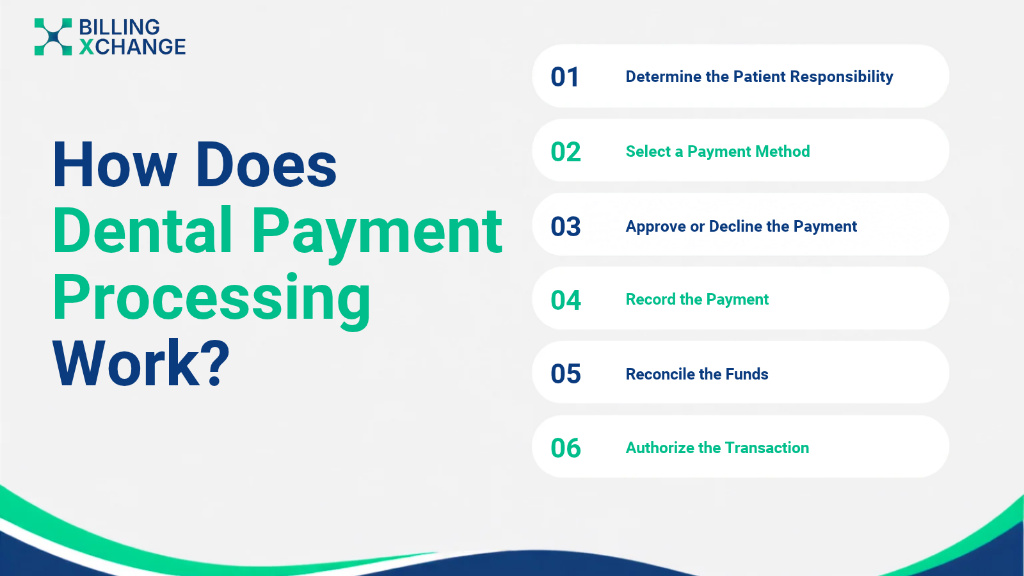
    Dental Payment Processing starts by identifying the patient’s financial responsibility and continues through payment authorization, recording, and reconciliation.

    1. Determine the Patient Responsibility

    • Review Patient Balance: Check copayments, deductibles, coinsurance, treatment deposits, and outstanding balances.
    • Confirm Amount Due: Use eligibility details, treatment estimates, and payment records to determine the expected patient responsibility.

    2. Select a Payment Method

    • Offer Payment Options: Accept credit or debit cards, online portals, electronic payments, mobile wallets, and in-office payments.
    • Support Convenience: Multiple options make it easier for patients to complete payments.

         3. Approve or Decline the Payment

    • Confirm Approval: Complete the transaction when the financial institution approves the payment.
    • Handle Declines: Review issues such as insufficient funds, incorrect card details, expired cards, or bank restrictions.

    4. Record the Payment

    • Update Patient Account: Record the payment accurately after authorization.
    • Prevent Errors: Proper posting helps maintain accurate balances and reduces duplicate collection efforts.

    5. Reconcile the Funds

    • Match Transactions: Compare processed payments with deposits and financial records.
    • Identify Discrepancies: Review missing payments, refunds, processing errors, and other differences promptly.

    6. Authorize the Transaction

    • Process Payment: Send the payment through the gateway and processor for authorization.
    • Protect Information: Use secure payment technology and appropriate security controls to safeguard sensitive payment data.

    For more information about available technology, Dental payment Processing Systems can help practices compare payment solutions.

    How Do Dental Practices Process Patient Payments?

    Modern Dental Payment Processing often happens through multiple channels rather than only at the front desk.

    In-Office Payments

    • Patients can pay during check-in or checkout using a card terminal, cash, or another accepted method. 
    • This approach allows staff to collect payment immediately and update the patient account.

    Online Patient Payments

    • Patient portals allow individuals to pay balances from a computer or mobile device. 
    • Online access can make collections more convenient and reduce the need for phone-based transactions.

    Recurring Payments

    • Some practices offer recurring payment arrangements for approved treatment plans or payment schedules. 
    • Automated payments can help patients manage larger balances while giving practices a more predictable collection process.

    Contactless Payments

    • Mobile wallets and contactless cards can simplify transactions. 
    • These options may also help reduce the time required to complete checkout.

    Payment Links

    • Some practices send secure payment links through approved communication channels. 
    • The patient can open the link and complete the transaction without calling the office.

    Practices looking for ways to improve the patient experience can review Payment Process for Your Dental Patients for additional payment workflow ideas.

    Dental Payment Processing vs Traditional Payment Collection

    Reviewing Dental Practice Payment Processes can help practices identify opportunities to simplify collections, improve payment tracking, and create a more consistent payment experience. 

    FactorTraditional CollectionModern Payment Processing
    Payment optionsLimitedMultiple digital options
    Patient convenienceModerateHigh
    Manual entryOften higherCan be reduced
    Payment trackingMore manualMore centralized
    ReconciliationTime-consumingMore streamlined
    CommunicationOften office-basedCan include digital channels

    Why Choose BillingXchange for Dental Payment Processing?

    BillingXchange helps dental practices organize payment workflows, maintain accurate patient accounts, and reduce repetitive administrative tasks. A structured approach can also make it easier for practices to monitor payments and keep financial information organized.

    A coordinated process connects patient balances, billing activity, payment records, and financial reporting, helping practices manage collections more efficiently and maintain better visibility into their financial operations.

    With professional support, dental teams can improve payment accuracy, reduce administrative workload, maintain organized records, and spend more time focused on patient care. BillingXchange provides the support practices need to strengthen payment workflows and improve day-to-day financial efficiency.

    Conclusion

    Reliable Dental Payment Processing helps dental practices manage patient payments, maintain accurate records, and improve collection efficiency. Clear procedures, convenient payment options, and regular reconciliation can create a smoother financial workflow.

    BillingXchange supports dental practices in organizing payment operations, reducing administrative workload, and improving financial management. A well-structured Dental Payment Processing workflow benefits both practices and patients by making payments easier and more efficient.

    Improve your dental practice’s payment workflow with organized, efficient to Contact us,from BillingXchange. Evaluate your current process and identify opportunities to improve payment accuracy, collection efficiency, and administrative productivity.

    Frequently Asked Questions(FAQS)

    1. Why Is Dental Payment Processing Important for Dental Practices?

    Dental Payment Processing helps practices collect patient balances accurately, reduce payment delays, and maintain organized financial records. It also gives patients convenient payment options.

    2. What Happens When a Dental Payment Is Declined?

    A payment may be declined due to insufficient funds, an expired card, incorrect payment information, or a bank security restriction. Staff can review the issue and offer another approved payment option.

    3. How Can Dental Practices Make Patient Payments More Convenient?

    A well-managed Dental Payment Processing workflow can include card terminals, online payments, electronic transfers, contactless payments, and secure payment links. These options make payments easier for patients.

    4. How Often Should Dental Payment Transactions Be Reconciled?

    Regular reconciliation is an important part of Dental Payment Processing. Practices should compare transactions with deposits and financial records to identify discrepancies, duplicate payments, refunds, or posting errors.

    5. How Can BillingXchange Support Dental Payment Workflows?

    BillingXchange can help practices organize payment workflows, improve account management, and reduce repetitive administrative work. Effective Dental Payment Processing can support accurate records and more efficient collections.

  • The Basics of Payment Posting: Definition, Process, and Best Practices

    The Basics of Payment Posting: Definition, Process, and Best Practices

    Introduction

    Payment Posting plays a vital role in helping healthcare organizations maintain healthy cash flow by accurately recording insurance and patient payments. Even a small posting error can lead to incorrect account balances, delayed collections, claim disputes, and revenue loss.

    It updates account balances based on reimbursements, contractual adjustments, deductibles, copayments, and write-offs. Accurate posting also provides better financial visibility and helps identify underpayments before they impact revenue.

    Organizations that use efficient workflows and follow proven Payment Posting practices improve reimbursement accuracy, strengthen revenue cycle performance, and maximize collections through a structured billing process.

    What Is Payment Posting?

    Payment Posting is the process of recording and reconciling insurance and patient payments after claims are processed. It ensures reimbursements are accurately recorded, adjustments are applied correctly, and patient account balances remain up to date.

    An efficient payment process  helps healthcare organizations identify payment discrepancies, improve financial reporting, monitor reimbursement performance, and maintain accurate revenue cycle records.

    Every recorded transaction provides valuable insights into reimbursement trends, payer performance, and outstanding balances. This visibility helps healthcare organizations make informed financial decisions, improve cash flow management, and support a more efficient revenue cycle. 

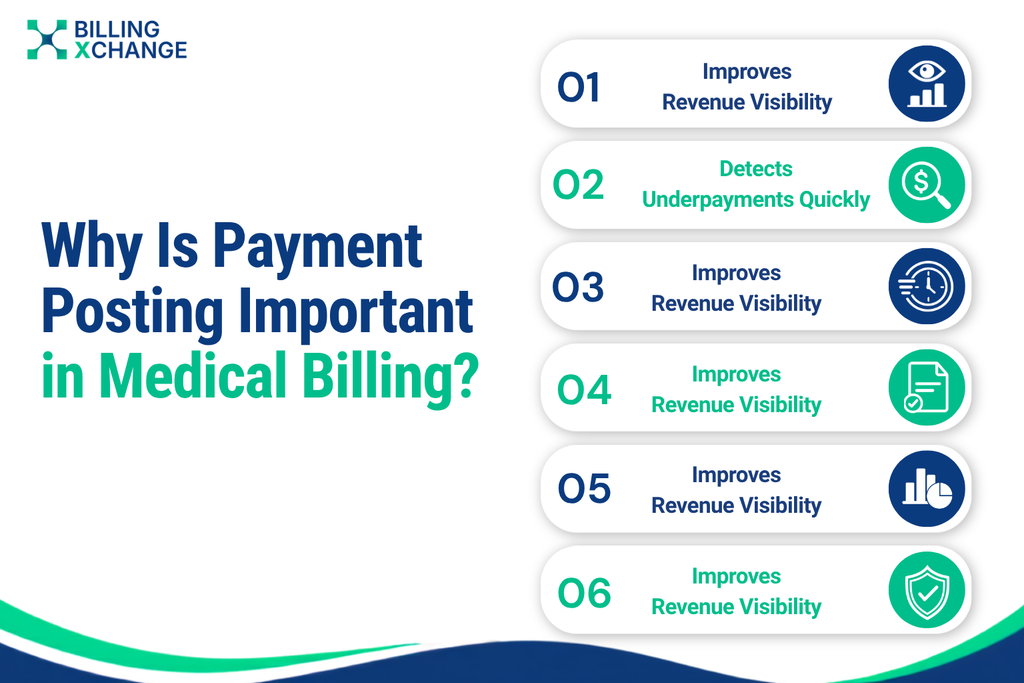
    Why Is Payment Posting Important in Medical Billing?

    Accurate Payment Posting is essential for a healthy revenue cycle because it ensures payments match payer contracts, patient responsibilities, and claim outcomes. It helps healthcare organizations reduce billing errors, improve financial reporting, identify payment variances quickly, and prevent revenue loss.

    1. Improves Revenue Visibility

    • Organizations gain a clear understanding of collected revenue, outstanding balances, contractual adjustments, and pending reimbursements.
    • Accurate financial visibility enables leadership teams to make informed operational and budgeting decisions based on real reimbursement data.

    2. Detects Underpayments Quickly

    • Insurance companies occasionally reimburse less than contracted amounts.
    • AccurateThis process helps  billing specialists compare received payments with expected reimbursements so underpayments can be identified and appealed promptly.

    3. Supports Faster Account Resolution

    • When payments are posted immediately through an efficientPayment Posting Process, remaining balances become visible sooner. 
    • Billing teams can contact patients, submit secondary claims, or begin denial follow-up without unnecessary delays.
    • Organizations that combine Accurate payment recording with efficient Dental Billing operations often experience smoother account management and stronger reimbursement performance.

    4. Reduces Billing Errors

    • Incorrect account balances confuse both providers and patients.
    • A consistent Payment Posting Practices minimizes duplicate entries, posting mistakes, and reconciliation issues while improving overall billing accuracy.

    5. Enhances Financial Reporting

    • Executives rely on accurate financial reports to evaluate organizational performance.
    • Reliable posting provides trustworthy reimbursement data that supports forecasting, budgeting, and revenue analysis.

    6. Strengthens Compliance

    • Healthcare organizations must maintain accurate financial documentation for audits and regulatory requirements.
    • Detailed posting records improve transparency while supporting compliance across billing operations.

    Organizations looking to optimize reimbursement workflows frequently adopt standardized Payment Posting Services to improve consistency, reporting accuracy, and operational efficiency.

    What Are the Different Types of Payment Posting?

    Healthcare organizations receive payments from multiple sources, making it essential to use a structured Payment Posting approach for each transaction. Understanding the different types of This process helps billing teams improve financial accuracy, reduce reconciliation errors, and maintain a healthy revenue cycle.

    1. Insurance Payment Recording

    • Records Insurance Reimbursements: Posts payments received from commercial insurers, Medicare, Medicaid, and other third-party payers.
    • Verifies Payment Accuracy: Reviews EOBs, ERAs, contractual adjustments, deductibles, copayments, and coinsurance to ensure accurate reimbursement.

    2. Patient Payment Recording

    • Posts Direct Patient Payments: Records payments received through cash, checks, credit/debit cards, online portals, and payment plans.
    • Maintains Accurate Account Balances: Updates patient accounts promptly to prevent duplicate billing and outstanding balance errors.

    3. Electronic Payment Recording

    • Processes ERA and EFT Payments: Uses electronic remittance and fund transfers to automate payment recording.
    • Improves Efficiency and Accuracy: Reduces manual entry while speeding up reconciliation and reimbursement tracking.

    4. Manual Payment Recording

    • Records Paper-Based Payments: Enters information from paper EOBs, checks, and manual payment documents.
    • Supports Complex Claims: Ensures accurate posting for specialty services and claims requiring detailed review.

    Comparison of Payment Posting Types

    Type Primary Source Main Benefit Best Use 
    Insurance Payment Posting Insurance Companies Accurate reimbursement tracking High insurance claim volumes 
    Patient Payment RecordingPatients Updated patient balances Direct patient collections 
    Electronic Payment Recording ERA & EFT Faster processing with fewer errors Automated revenue cycle workflows 
    Manual Payment RecordingPaper EOBs & Checks Greater control for complex cases Specialty practices and exceptions 

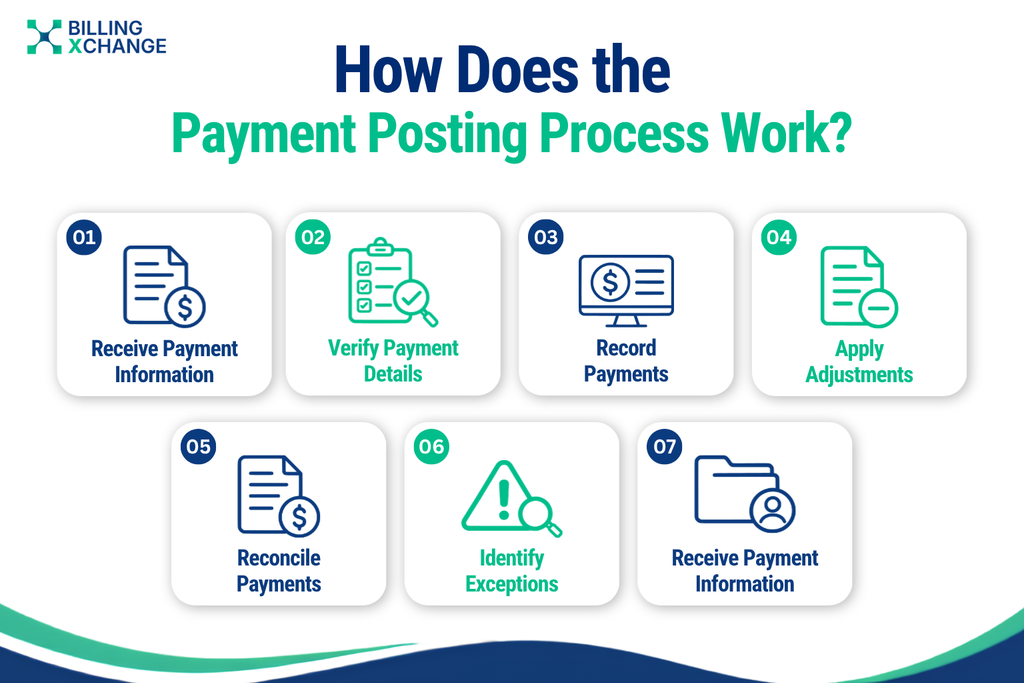
    How Does the Payment Posting Process Work?

    An effective Payment Posting workflow follows a structured process to accurately record and reconcile every payment against submitted claims, while experienced Medical Billing professionals verify payment accuracy  and resolve exceptions to ensure reliable financial records. 

    Step 1: Receive Payment Information

    • Electronic Remittance Advice (ERA)
    • Explanation of Benefits (EOB)
    • Electronic Funds Transfer (EFT)
    • Patient payments
    • Credit/debit card payments
    • Checks

    Step 2: Verify Payment Details

    • Patient information
    • Claim number
    • Insurance payer
    • Payment amount
    • Service dates
    • Procedure codes
    • Adjustment codes
    • Patient responsibility

    Step 3: Record Payments

    • Enter payment details into the billing system
    • Update patient account balances
    • Record insurance reimbursements
    • Apply deductibles and copayments

    Step 4: Apply Adjustments

    • Contractual adjustments
    • Allowed amounts
    • Non-covered services
    • Coinsurance
    • Copayments
    • Deductibles

    Step 5: Reconcile Payments

    • Compare payments with submitted claims
    • Verify reimbursement amounts
    • Review contractual adjustments
    • Confirm outstanding balances

    Step 6: Identify Exceptions

    • Partial payments
    • Underpayments
    • Incorrect adjustments
    • Missing claims
    • Duplicate payments
    • Denied services

    Step 7: Prepare Accounts for Follow-Up

    • Patient billing
    • Secondary insurance billing
    • Appeal submission
    • Denial management
    • Collections
    • Account closure

    What Are the Best Practices for Accurate Payment Posting?

    Accurate Payment Posting requires a structured workflow that improves reimbursement accuracy, reduces payment discrepancies, and supports a more efficient revenue cycle. Following proven best practices helps healthcare organizations maintain consistency, improve accuracy, and strengthen revenue cycle performance. 

    Verify Every Payment Before Posting

    • Patient information
    • Claim number
    • Procedure codes
    • Payment amount
    • Allowed amount
    • Contractual adjustments

    Reconcile Payments Daily

    • Compare posted payments with submitted claims
    • Identify payment discrepancies quickly
    • Resolve outstanding payment variances
    • Update account balances regularly

    Monitor Underpayments

    • Review expected reimbursement amounts
    • Compare actual payer payments
    • Identify underpayments promptly
    • Initiate timely follow-up

    Standardize Posting Procedures

    • Follow documented workflows
    • Use standardized posting guidelines
    • Maintain consistent quality checks
    • Train billing staff regularly

    Leverage Automation with Human Oversight

    • Automate routine payment workflows
    • Review payment exceptions manually
    • Verify ERA and EOB accuracy
    • Resolve complex reimbursement issues

    Track Key Performance Indicators (KPIs)

    • Payment turnaround time
    • Posting accuracy rate
    • Underpayment rate
    • First-pass reconciliation rate
    • Outstanding accounts
    • Revenue recovery rate

    Why Choose BillingXchange for Payment Posting Services?

    Managing payment posting internally requires experienced staff, consistent quality control, and continuous monitoring. BillingXchange provides reliable Payment Posting Services to help healthcare organizations improve reimbursement accuracy, reduce administrative workload, and strengthen financial performance.

    Our billing specialists verify payments, reconcile EOBs and ERAs, identify payment variances, and maintain accurate financial records. We also support electronic and manual payment processing, contractual adjustment verification, and comprehensive revenue reporting.

    With BillingXchange, healthcare providers benefit from faster reimbursement visibility, improved revenue cycle efficiency, and scalable billing solutions that minimize errors while enhancing financial transparency.

    Conclusion

    Accurate Payment Posting is essential for maintaining a healthy revenue cycle. It improves financial reporting, accelerates reimbursement tracking, strengthens cash flow, and reduces posting errors through consistent and efficient workflows.

    Partnering with BillingXchange helps healthcare organizations streamline reimbursement workflows, improve payment accuracy, and enhance revenue cycle performance while allowing providers to focus on delivering quality patient care.

    Contact us today for BillingXchange to learn how our billing specialists can streamline your billing operations and support long-term revenue growth.

    Frequently Asked Questions (FAQs)

    1. What is Payment Posting in medical billing?

    Payment Posting is the process of recording insurance and patient payments, applying contractual adjustments, updating account balances, and reconciling reimbursements after claims are processed.

    2. Why is accurate payment recording important? 

    Accurate payment recording reduces billing errors, improves financial reporting, identifies underpayments, accelerates reimbursement tracking, and supports a healthier revenue cycle.

    3. Who performs payment recording?

    Payment recording is typically handled by trained Medical Billing professionals who review EOBs, ERAs, insurance payments, patient payments, and contractual adjustments before updating billing systems.

    4. Can this process be automated?

    Yes. Many healthcare organizations use ERA and EFT integrations to automate payment workflows. However, experienced billing specialists should still review transactions to ensure accuracy and resolve exceptions.

    5. Why should healthcare organizations outsource these services?

    Outsourcing helps improve accuracy, reduce administrative workload, accelerate reconciliation, enhance reporting, and allow healthcare providers to focus on patient care while billing experts manage financial operations.